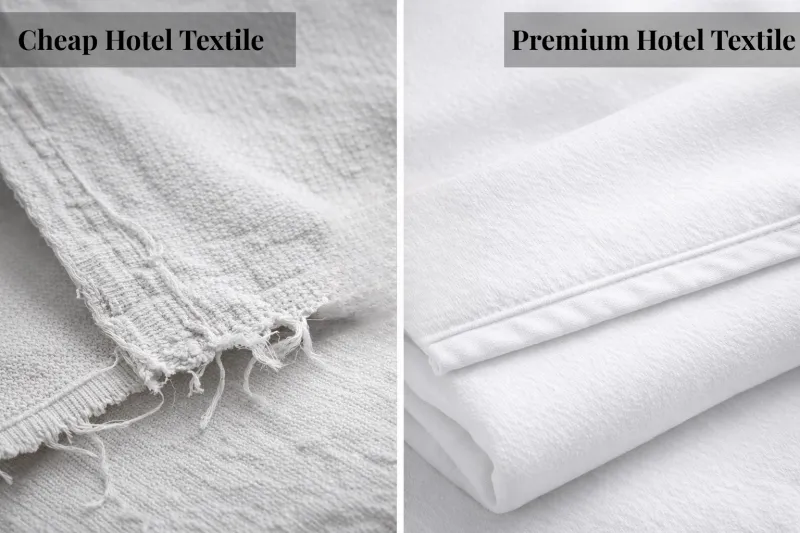


For a hotel operator or purchasing manager, keeping the budget under control is always a top priority. However, when it comes to hotel textiles, focusing solely on the product’s price tag can often be misleading. Textile products that appear low-cost may actually lead to much higher expenses in the long run due to their short lifespan, higher operational costs, and negative impact on guest satisfaction.
Compared to standard home textiles, hotel textiles are exposed to a far more intensive usage cycle. Frequent washing, high temperatures, industrial chemicals, and continuous use directly test the durability of the fabric. For this reason, choosing the right product is not just a purchasing decision—it is also a strategic investment that affects operational efficiency and the overall guest experience.
At Pelikan Tekstil, let’s take a closer look at how the real cost of hotel textiles is formed and how the right product selection can increase your return on investment (ROI).
While home textiles are typically washed once a week, hotel textiles are washed 3–4 times per week and are exposed to high industrial machine temperatures and the pressure of roller ironing systems.
Low-Quality Products:
· Quickly begin to pill and thin out.
· Often start tearing after only 20–30 washing cycles.
Pelikan Standards:
· With our special weaving techniques and high-strength yarn selection, our products maintain their form even after 100+ washing cycles.
The Real Cost:
While cheap products may need to be replaced 3–4 times a year,
investing in quality textiles ensures operational continuity with a single
long-term investment.
Textile cost is not limited to the purchase invoice; every washing and drying process creates an operational expense.
Fast Drying:
Thanks to optimized fabric weight and the right yarn composition, our towels
dry faster in dryers, reducing energy consumption.
Ironing Efficiency:
Low-quality fabrics create stubborn wrinkles that increase ironing time and
labor costs. Pelikan’s easy-to-iron fabrics help your housekeeping team work
more efficiently and save valuable time.
Textiles are the most direct point of contact between your hotel and your guests. Online comments such as:
· “Rough towels”
· “Worn-out bed sheets”
can lead to lost reservations. The small price difference you think you saved can cause significant damage to your brand image. In reality, high-quality textiles are one of the most effective and affordable marketing tools.
Frequently replacing textile products does not only strain your budget—it also puts pressure on the environment. Using long-lasting products reduces textile waste and strengthens your hotel’s eco-friendly image.
When making purchasing decisions, focus not on the unit price but on “Cost per Wash” analysis.
At Pelikan Tekstil, we offer more than just fabric—we provide a long-term cost advantage for your operations.

Pelikan Tekstil was established in Denizli, one of the most important textile centers, in 2001 to meet the textile needs of hotels, hospitals, dormitories, and similar facilities.

Pelikan Tekstil - Copyright . All rights Reserved.
Pelikan Tekstil was established in Denizli, one of the most important textile centers, in 2001 to meet the textile needs of hotels, hospitals, dormitories, and similar facilities.